

The Seoul Metropolitan Government will revise rules to determine public contribution levels earlier in private development projects.
The city aims to reduce uncertainty for developers by finalizing the scale of public contributions and associated floor area ratio incentives earlier in the planning process. This change is intended to prevent the need for project plan revisions caused by fluctuations in construction costs and land prices.

What happened
The city is changing the timing of when public contribution requirements and incentives are fixed during the development permit process.
Verification record
- Verdict
- Verified
- Headline supported
- Supported
- Evidence standing
- Verified
- Corroboration
- Not assessed
- The material retrieved was the record itself.
- The source was reachable when the record was checked.
- Actor confirmed: Seoul Metropolitan Government.
- Date confirmed: 3 November 2026.
Discrepancies
None recorded.
What the source states

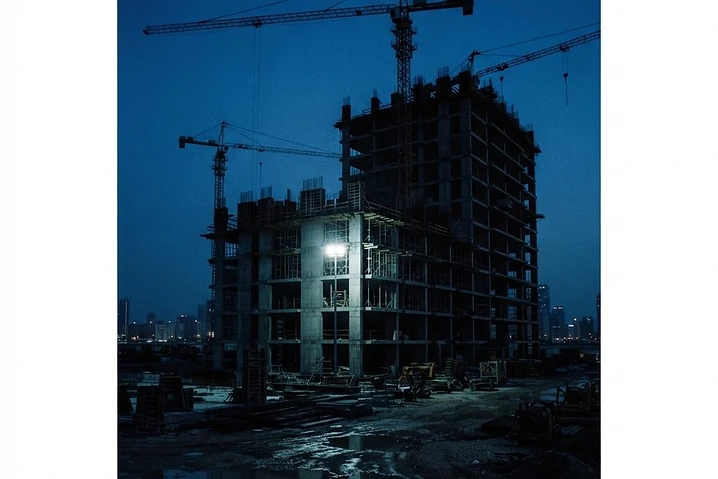
The Seoul Metropolitan Government will revise the enforcement rules of its Urban Planning Ordinance to fix the scale of public contributions and floor area ratio incentives at the time the district unit plan is announced, rather than at the later permit approval stage. This change aims to improve project predictability for developers by reducing uncertainties related to shifting land prices and construction costs. The city also intends to shift responsibility for calculating these costs to the department responsible for drafting district unit plans.


Where it sits in the system
The policy change is designed to stabilize the development environment and reduce financial risks for private construction projects in Seoul.
Boundary of the record
- ·This record has been read against its source. The reading establishes what the source states, and nothing beyond it.
No interpretation is recorded. Discovery produces candidates and stops.
What this does not establish
The boundary of the record is stated with it, and travels wherever it is displayed.
Provenance
Source date
3 November 2026
When the source is dated.
Observation date
3 November 2026
When the event occurred, as the source states it.
Retrieval date
11 November 2001
When Lawton obtained the material.
Publication date
11 November 2026
When the item entered the feed.
Checked
11 November 2026
When the record was read against its source.
Source
Seoul Economic DailyHow we know
The record keeps four dates apart: when the source is dated, when the event occurred, when Lawton obtained the material, and when the item entered the feed. They are not interchangeable, and none is substituted for a missing one.
Where it sits
The intelligence judgment
City or regional economy signal discovered in Seoul.
- Decision state
- Not Established
- Editorial state
- System Change
Related published developments
A New York Times report suggested some of Iran’s dams might be built to support its missile program, sparking backlash. Experts cited in the report and Iranian officials have challenged its reasoning, expressing concerns that it could be us
A fast-lane sweep of Hamburg, Germany surfaced a record published by dominicanrepublicpost.com, carrying the outlet's publication timestamp 2026-11-18 11:14 UTC.
Read the observationPoland's consumer protection office, UOKiK, has fined e-commerce firm Allegro 54.7 million zlotys ($13.7 million) for misleading environmental marketing practices related to a tree-planting promotion. The watchdog cited Allegro for misrepre
A fast-lane sweep of Warsaw, Poland surfaced a record published by wabx.net, carrying the outlet's publication timestamp 2026-11-18 10:21 UTC.
Read the observationThe Michigan Commission of Agriculture and Rural Development approved a $175,000 Food and Agriculture Investment Program grant for ZFS Riga, a subsidiary of Zeeland Farm Services. This funding supports a $54 million project to rehabilitate
A fast-lane sweep of Riga, Latvia surfaced a record published by whtc.com, carrying the outlet's publication timestamp 2026-11-18 09:15 UTC. The outlet's title, as indexed: "ZFS Subsidiary Lands State Grant for Expansion Efforts".
Read the observation